


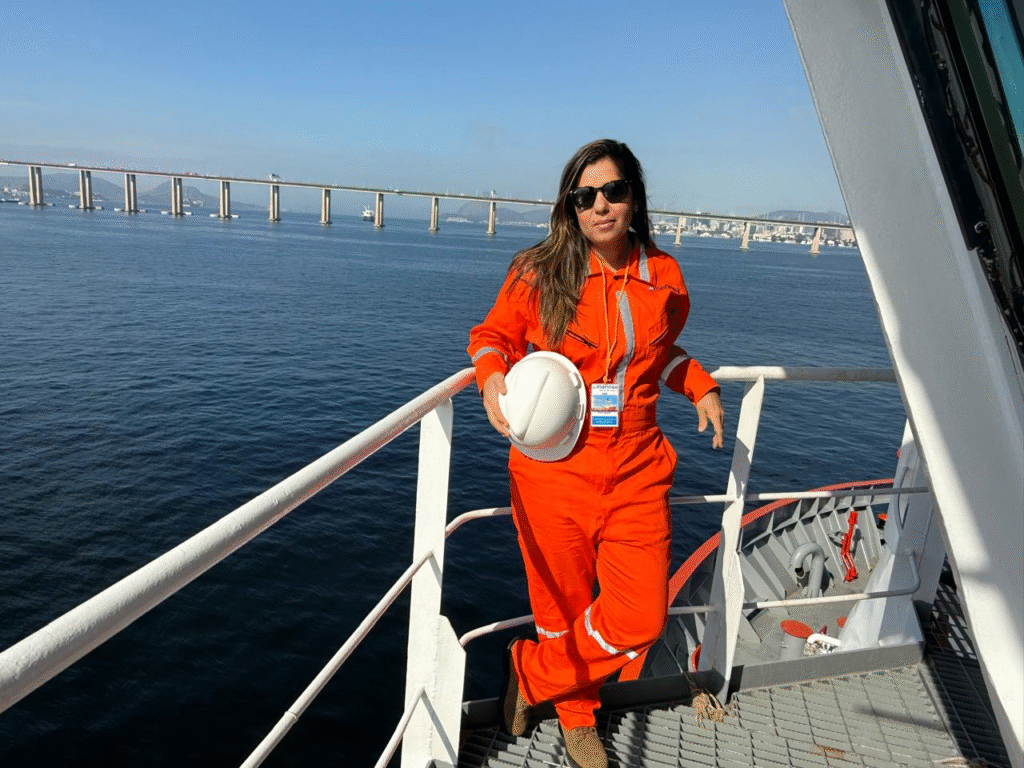
In this edition of our Energy Talks series, we’re pleased to share a conversation with Vanessa Costa, Business Development at Marinsa and an independent consultant in the global offshore sector. She has been 15 years since graduating from PUC-Rio and becomes the first chemical engineer to be featured in this space.
Vanessa opens up to Westhon, reflecting on her career journey, the role of women in the workforce, her passion for psychology, and her plans for the future. A must-read!
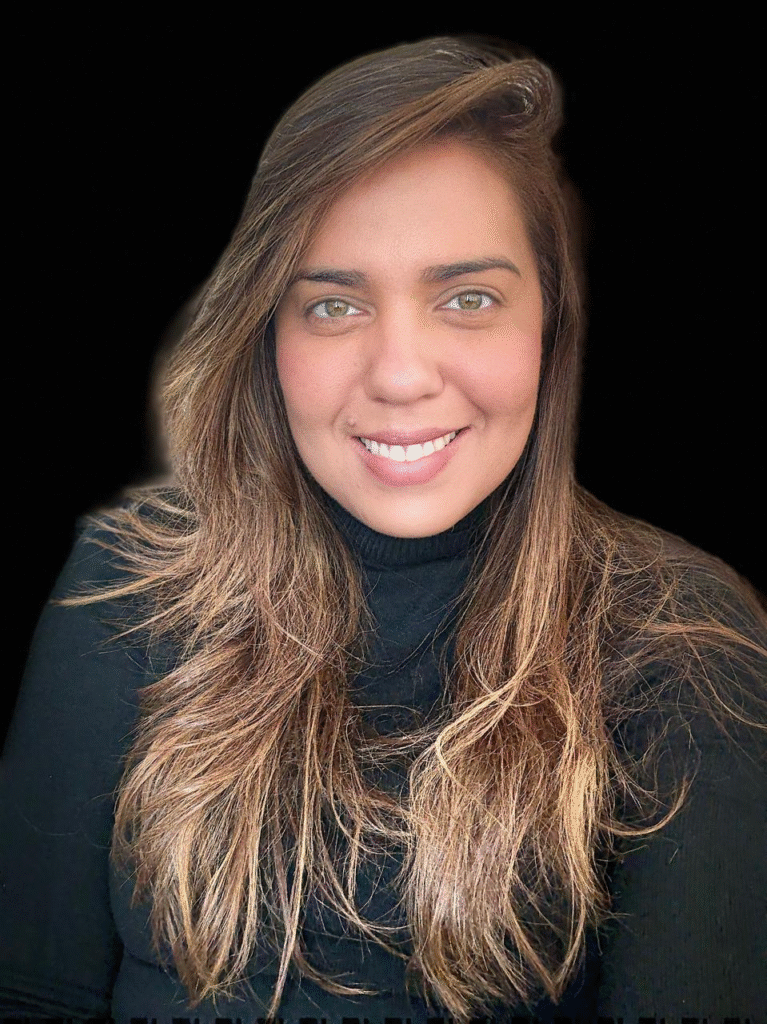
Let’s start with a recent topic: your work on mental health in the workplace. You stirred up quite a reaction on LinkedIn with a post about it. Shortly after, participated on the same theme at the “Women of Energy: Female Leadership in the Energy Sector” event, hosted by the Energy Industries Council (EIC). What motivated you to shed light on these issues?
That LinkedIn post, as we say in Brazil, “wasn’t therapy, but it was therapeutic.” I finally spoke out about something I’d wanted to address for a long time—something I’ve seen a lot in large corporate cultures.
It took me a while to find the courage to speak out, I know, but my main goal was to open up an honest conversation—especially now that we’re finally beginning to talk about psychological safety in the workplace.
Within what you’re able and comfortable to share, what are some of the biggest challenges you and the industry still face when it comes to psychological safety?
There are still a lot of barriers for women and minorities in general. I try not to let it paralyze me. Instead, I speak up and fight for my rights—and for others who have been through the same. Psychological safety must be taken seriously. So many people are getting sick due to pressure, bullying, sexual harassment, and other forms of abuse.
Let’s talk about the other side of the coin. What progress have you seen in this area?
We have the Federal Constitution and improved labor laws in Brazil. In 2022, there was a major legal advancement requiring companies to implement real, effective actions to prevent harassment at work and promote effective actions in the workplace.
Companies are now being pushed to align with this new reality and end the culture of silence. Superficial courses and feel-good slogans aren’t enough anymore. Many reporting channels are managed by HR and not entirely confidential, which creates fear of retaliation. That leads to silence, fear, and illness.
Here’s a thought to carry: Integrity, honesty, and humility will take a person further in their career than technical skills alone ever could. In the professional world, as in life, what truly endures is character. Good people build lasting legacies.
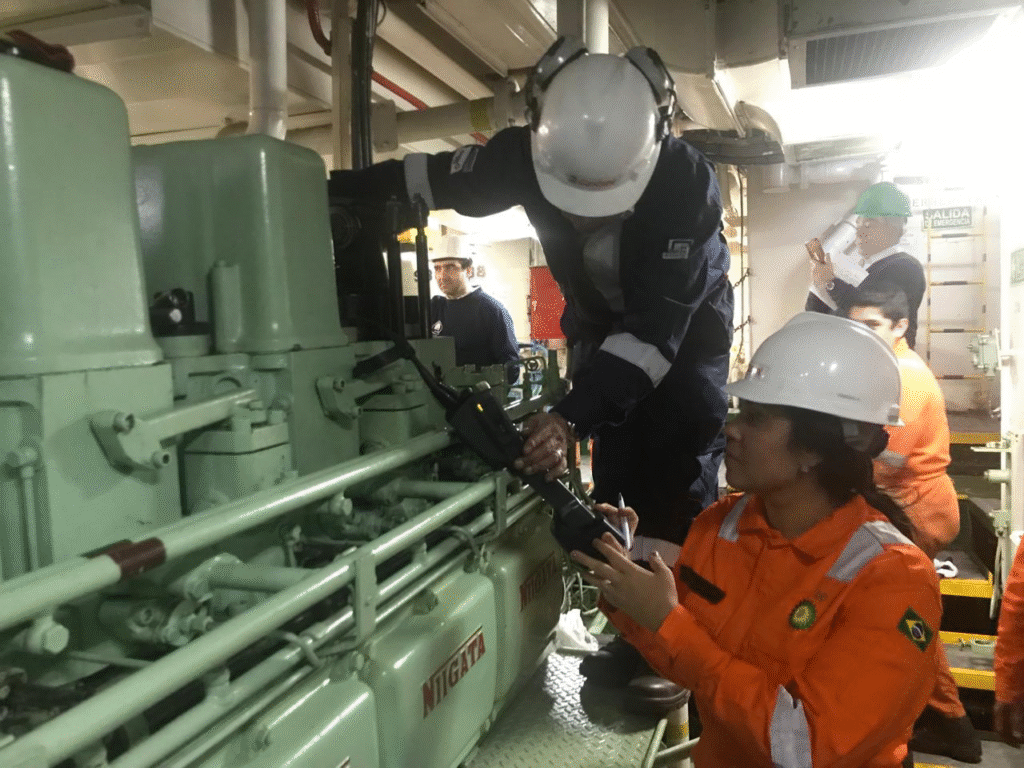
Beautifully said. Who inspires you?
As a woman and a citizen, I draw a lot of inspiration from my mother and my grandmother. They instilled in me all the values I hold dear, and I now pass them on to my daughter, who’s seven. We’re strong women with firm, thoughtful views of the world.

I also admire the psychologist Yumara Lúcia Vasconcelos from the Federal Rural University of Pernambuco. She has done incredible work and holds a postgraduate degree in Human Rights. Her publications are outstanding, especially on mental health in the workplace and compliance. She should write a book…
And you? Do you think about writing a book? What are your plans for the future?
Perhaps (write a book).
I’m focused on expand my presence in the global offshore market and support Marinsa’s growth in Brazil — especially in the offshore segment. I’m also passionate about encouraging more women to pursue leadership positions in the industry.
Another priority for me is contributing to a fair and gradual energy transition, a cause I deeply believe in. With a strong background in the Oil and Gas/Energy segment and Environmental Management, I’m committed to using this knowledge to drive meaningful and sustainable impact.
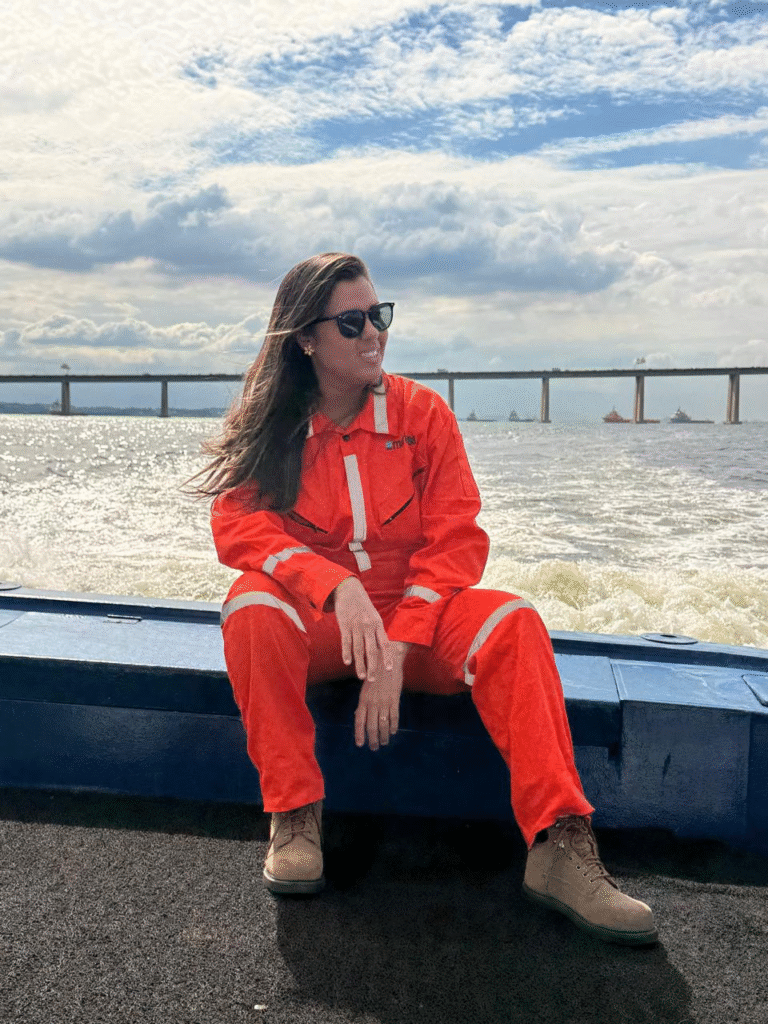
What’s your view on the energy transition?
Oil will remain a primary energy source for some time, even as we move toward cleaner alternatives. Brazil already has a relatively clean energy matrix, especially in onshore, but the offshore market holds incredible promise—particularly with the rise of wind energy projects.
The energy transition presents challenges but also opens the door to innovation and new business models.
How do you see the OSV market in Brazil today?
Demand is growing. However, there’s a vessel supply shortage that is growing along as well. The Brazilian fleet is aging, and several vessels are about to be decommissioned, which impacts the availability and, as consequence, the charter rates.
Additionally, foreign companies are also struggling to bring in their vessels to Brazil. There is a great LinkedIn post by WSB that really captured the issue—sometimes vessels are blocked just as they reach Brazil or even once they’re already here. It’s quite challenging for foreign companies to operate in Brazil at this moment.
Despite Petrobras opening bids for foreign-flagged vessels, we still face the risk of blockage. The Brazilian market is full of opportunities, but foreign shipping companies hit major legal barriers.
Our legislation is outdated in this regard—it should keep up with the pace of the market. Right now, it’s like listening to a WhatsApp message on 1x speed while the market is moving at 2x.
WSB touched on this at their last seminar, and I couldn’t agree more.
Now let’s go back to the beginning of your career. Tell us about your early years and how you chose chemical engineering.
I’m from Rio de Janeiro and have always been curious about how things work. As a kid, I used to mix my mom’s beauty products—deodorants, perfumes, shampoos—you can imagine the mess I made (laughs).
In high school, I fell in love with the lab, and that’s when I realized I wanted to work with chemistry. I was also good with numbers, so instead of going into teaching or pure lab work, I chose chemical engineering. It gave me a broader view of processes and opened up more career possibilities—especially in the energy sector, which had always fascinated me.
I started my degree with an open mind—unsure of the exact direction, but knowing I wanted to be involved in meaningful, large-scale projects.
How did your professional journey begin?
I’ve always been focused on becoming a top professional. I even took some unpaid internships early on. Around 2006, I had the opportunity to intern and was awarded a research grant to study organochlorine compounds in Guanabara Bay. The project explored their impact on local fauna and flora, as well as the broader consequences for society. That experience really opened my eyes to the connection between science, the environment, and people—and it sparked my curiosity for the offshore world.
After I graduated, one of my first jobs was working with energy projects in Brazil’s Northeast, specifically focused on thermoelectric power plants. It was an incredible technical learning experience—especially being involved from the early project phase through to the commissioning of two plants in João Pessoa. Seeing them go from concept to full operation was a milestone I’m truly proud of.
But it was my time at TechnipFMC from 2012 to 2015 that really solidified my love for offshore. I worked on early field development projects and with process safety in mature assets.
Later, at BP Energy (2016–2024), I had the opportunity to work on both technical and commercial fronts across LATAM. That experience helped me transition from engineering to a more commercially focused role.
How was that transition from engineering to commercial?
Career changes are never easy, but I was fortunate to take on roles—especially at BP—that, while technical, had strong commercial aspects. The transition felt natural, and my engineering background has become a valuable asset in business conversations and decision-making.
In a previous chat, you shared a fascinating story. Would you mind sharing it again with our readers?
Sure! In 2023, BP invited me on a cruise to Cozumel, Mexico, for a conference with our commercial partners. At the time, I was managing contracts for Castrol, a BP subsidiary, across several South American countries. It was right after the pandemic, and the experience was truly special—a wonderful opportunity to reconnect in person with colleagues and business partners, and also to strengthen key commercial relationships.
That trip also left a lasting impression on me for another reason: I realized that, throughout the cruise, I was the only woman in every meeting and gathering from the territory I managed. While it’s not uncommon to see fewer women in offshore or technical environments, that moment made the gender gap especially visible. It reminded me that we still have a long way to go in creating more inclusive spaces in our industry.
Supporting women toward leadership has always been a personal mission. Throughout my career, I’ve actively participated in initiatives to promote gender equity in the energy sector. While at BP, I had the opportunity to serve on the global planning committee for BP WIN STEM—an initiative focused on empowering women in Science, Technology, Engineering, and Mathematics. We organized a series of global online events to engage and inspire women from all over the world. It was a powerful experience that reinforced my belief in the importance of collective action to create more inclusive and diverse leadership spaces.
How was the transition from BP to Marinsa?
It was both difficult and easy. Leaving BP was emotionally tough—it meant a lot to me. And like any job change, it came with butterflies. But when I saw the opportunity for professional growth, I didn’t hesitate.

Final considerations…
If there’s one thing I’ve learned throughout my career, it’s that growth often comes from the courage to step into the unknown. Whether navigating offshore operations, commercial strategy, or the complexities of workplace culture, I carry with me a strong belief in integrity, inclusion, and continuous learning. I hope my journey can serve as a reminder that there’s space for transformation—even in the most traditional industries—and that women belong in every room where decisions are made.
Thanks, Vanessa